RESTORATION OF DRINKING WATER TANK
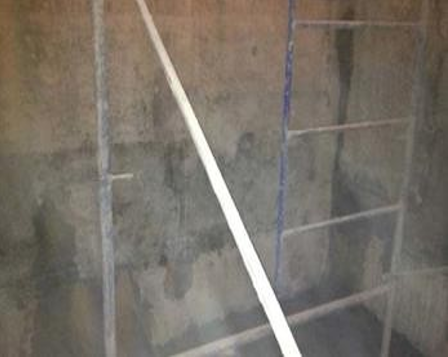
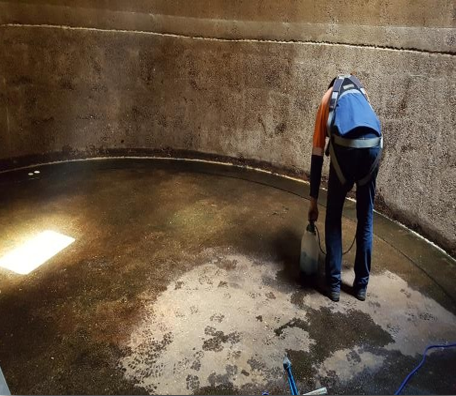
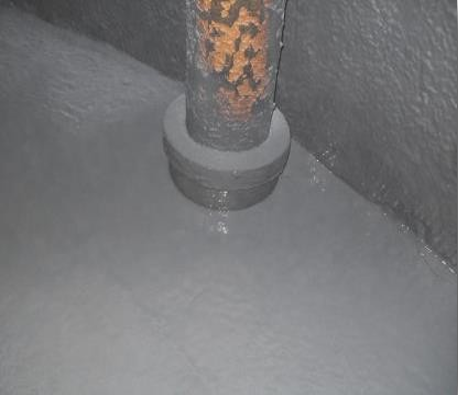
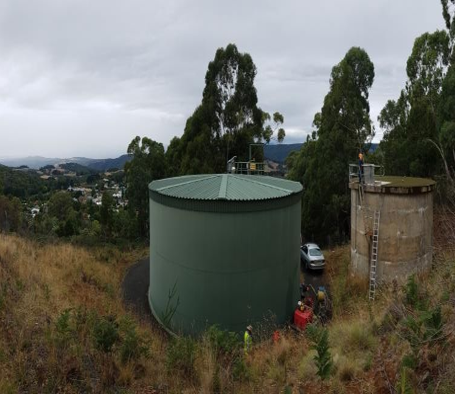
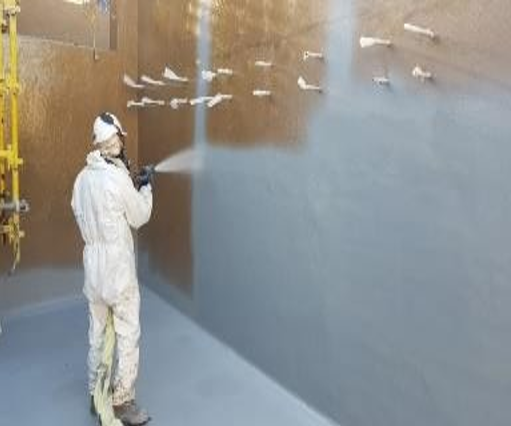
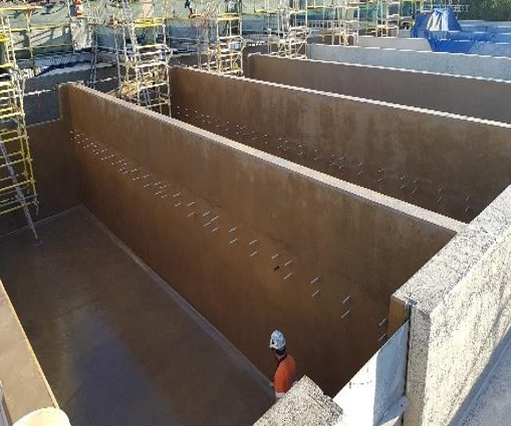
Seal the tank walls to the top seam with SCP 743. This will stop scale formation and seepage through solid wall sections and through small cracks at joints, as well as minimize the development of existing corrosion, increase concrete resistivity, and minimize punctures in additional coatings. Fill the bug holes with a mixture of ShieldPrime UNI and KD sand to make a solution. Apply ShieldPrime UNI primer to the floor surface and up to ~200mm above the first wall joint above the floor. Cover the floor and up to ~200 mm above the first wall joint with a layer of ShieldPoly F-15. The entire system has been approved for potable water to AS 402 with exceptional results. The service life of a concrete tank is now extended by at least 25 years with minimal costs.
BUCKET FILER TO REDUCE JAMMING
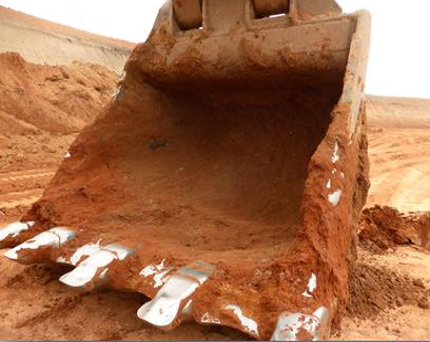
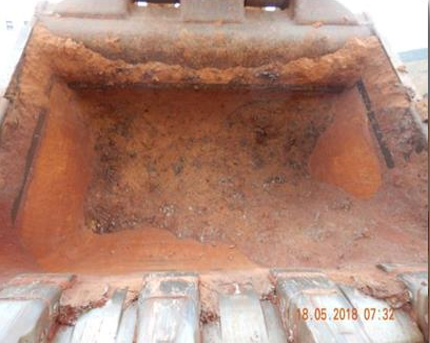
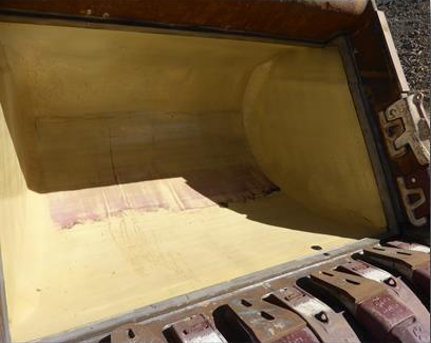
A customer came to us with a problem of loss of productivity due to heavy clay soil sticking on the bucket. This meant that more time and resources were spent on moving material.
The first step in this process was to clean the bucket of clay soil and then abrading the surface/ShieldPrime UNI was used to prime the bucket surface to ensure the greatest adhesion between the polyurea and the bucket surface.
This was followed by 10mm of ShieldPoly F-15 to reduce the rate of hang build-up, extend the life of the asset and make it easier to clean if needed.
A follow-up inspection was conducted one year later, which revealed minimal wear and tear and damage to the polyurea coating despite 11 months of continuous use.
CYANIDE EXTRACTION AND FLOCCULANT RECOVERY
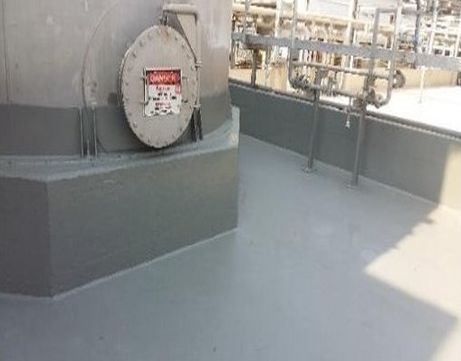
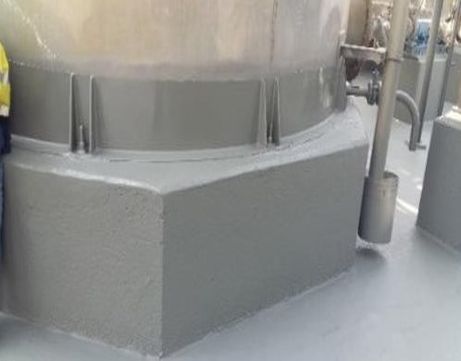
The project consisted of 3 embanked zones, a primary protective shell for washing out 2x cyanides and a secondary protective shell for flocculant and rehabilitation. All areas had to be decontaminated and rebuilt after excessive decomposition, and in some places the cancer had seeped into the concrete. A steam jet system and UHP hydrojet treatment were used for decontamination and mechanical impact on the base.
SCP 743 was chosen to remove the seeped contamination and block any future potential erosion from further damage and protect the rebar from further corrosion propagation. Repair putty was used on all of the damaged concrete to restore the profile. ShieldPrime UNI and ShieldPoly F-15 were used as a base coat for long-term surface protection.
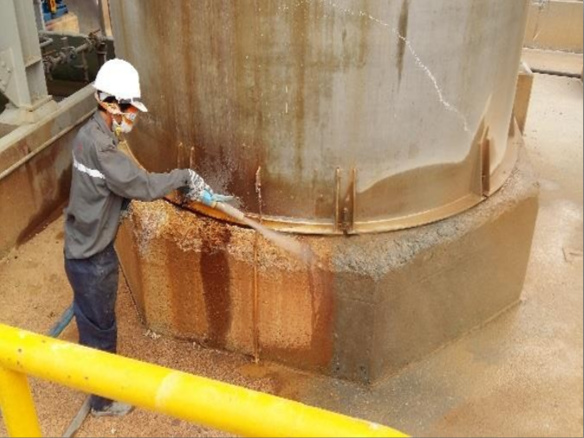
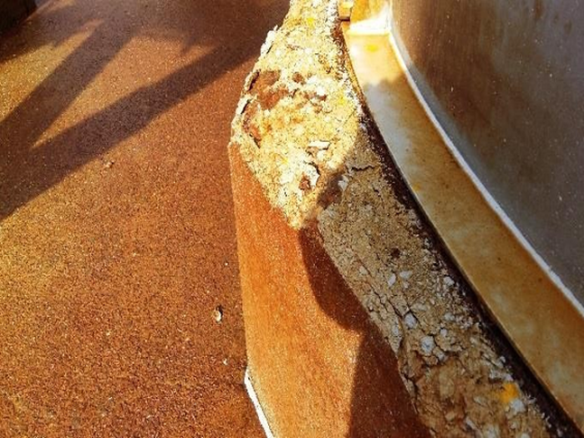
We have developed environmentally responsible solutions that use only VOC-free products and cost-effective blasting solutions that eliminate airborne dust and reduce consumables (abrasive media and water) by 75%. We set industry standards by offering innovative turnkey solutions that have virtually no impact on labor protection and the environment.

CONVEYOR BELTS REPAIR
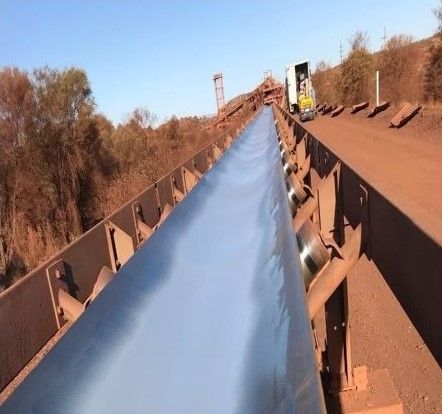
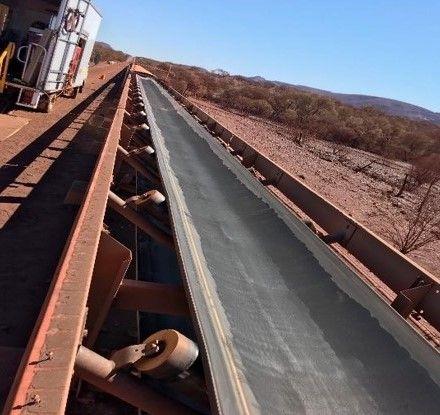
The customer was one of the world's largest iron ore mining companies. They wanted the 20-kilometer conveyor to last until the next big stop. As a first full-scale test, our customer applied the BeltShield® system to the belt while it was stationary.
The tape owner wanted 6 weeks. Turns out it's still working 12 months later! They have further sectioned the belt during additional short stops and are now talking about using the Beltshield system to extend belt replacements for up to 5 years!
The BeltShield system is a 100% solid ground and 100% solid polyurea topcoat specially formulated to adhere to rubber and withstand the forces placed on the product as it passes through the main rollers within minutes of application.
ShieldPrime CV systems are revolutionary.
Because they are the first 100% solids primers that bond as well, if not better, than the solvent-based products commonly encountered by crews. The exceptional adhesion and physical properties of ShieldPoly CV mean that the product will not peel off in sheets. The excellent combination of physical properties means that it can outperform the original rubber coating with minimal flaking on rough edges.

PROTECTIVE COVERING OF WASTEWATER TANK
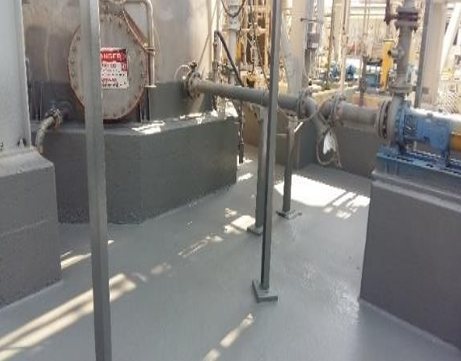
Our company helped wastewater treatment plant engineers (WWTP) choose a system that allowed them to accelerate construction times and combine them with the installation of membranes, as well as provide a product warranty.
Although not required for the polyurea system, the walls were primed with Epimax225 to provide a uniform base. Despite using Epimax225, the tanks were primed with ShieldPrime UNI to minimize pinholes. As a result, despite the relatively new and porous concrete structure, the number of holes was minimized.
Polekote was used to simplify some details around bolts and other holes to improve the construction program for contractors.
The Cleveland Bay team was given a 10-year guarantee.
REPAIR AND RESTORATION OF STEEL POLES
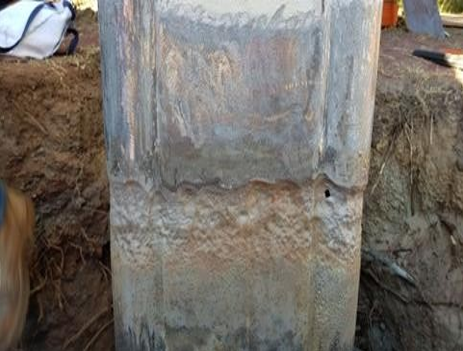
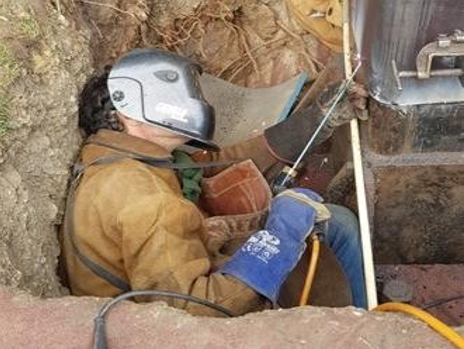
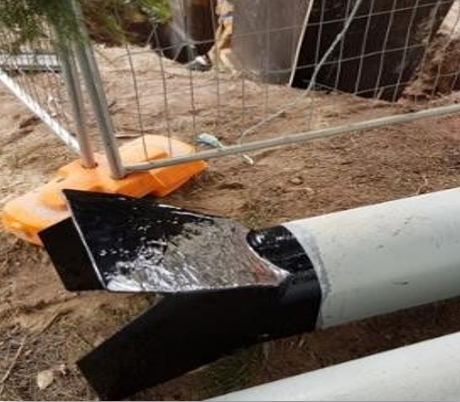
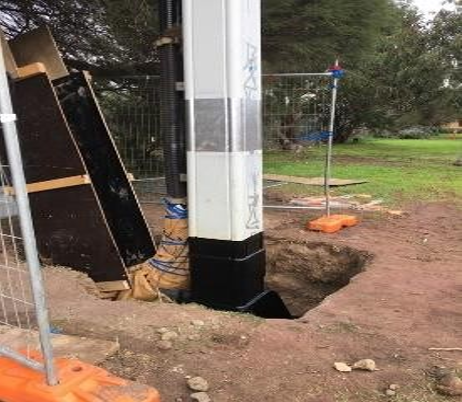
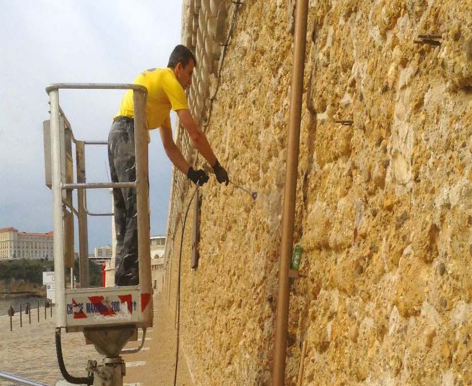
Regular inspections revealed severe corrosion around the ground line of the steel poles; 12.7 mm plates between 9 mm pipes with a diameter of 100 mm. The company CoEng.biz was involved in assessing the residual strength, surveying the pillars to be connected with a base plate at a depth of about 1m below the ground level and preparing recommendations for eliminating the consequences.
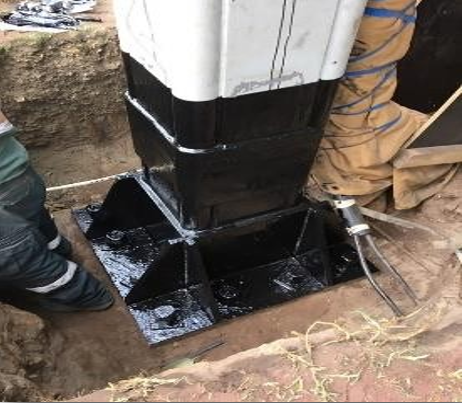
It was found that approximately half of the original strength was retained. The pole is located in the South Yarra built-up area on the outskirts of Melbourne and supports an oil-filled Underground to Overhead (UGOH) cable. Replacing the pole would cost about $3 million. Therefore, the decision was made to remove the corrosion, weld a steel reinforcement plate over the corroded area, and re-coat the entire steel surface underground and up to 200 mm above ground.
Underground bitumen based coatings and galvanizing lasted about 25 years before corrosion started, so we are confident that Polekote castor oil based urethane coating will last another 20+ years.
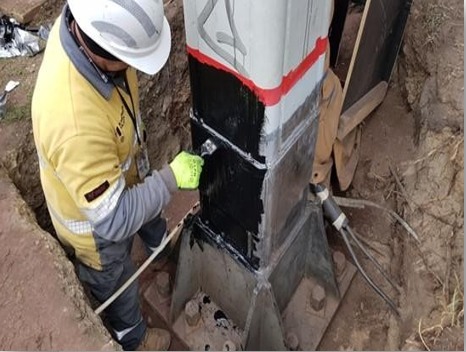
Polekote is hand-applied and supplied in pre-measured blister packs where mixing is done before the packs are opened. After opening, Polekote is applied to the surface and cleaned with a brush with a layer thickness usually from 0.4 mm to 0.7 mm (in this case, the layer thickness was closer to 1 mm).
Additionally, we placed two layers around the ground line area with red sandblasting tape between the layers to serve as an indicator for inspectors.
IMPROVING THE QUALITY OF CONCRETE
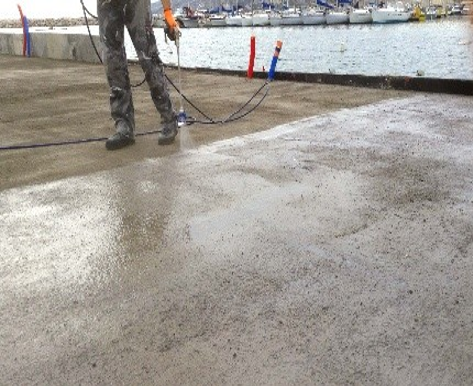
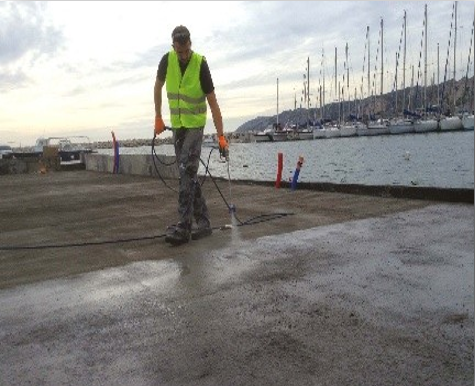
The port is located on the coast by the sea. The Port Authority was looking for a higher quality concrete surface on quay decks with less plastic cracking, resistant to the ever-present salt exposure of the sea and air, and was frustrated by the inability of traditional coatings and membrane products to solve these problems.
They also wanted to improve the quality of concrete in areas open to the public.
In late 2014, they appointed a company to treat the concrete deck with SprayLock Concrete Protection during the delivery and placement of concrete near the piers and wharf edge.
The concrete is processed and open to the Port Authority within 24 hours. It was observed that compared to traditional laying methods, fewer cuts were required and no cracks were visible at all. The Port Authority now has concrete that will withstand the harsh marine environment and remain pristine and corrosion-resistant throughout its lifetime.
PROTECTION OF STEEL CONNECTING PLATES
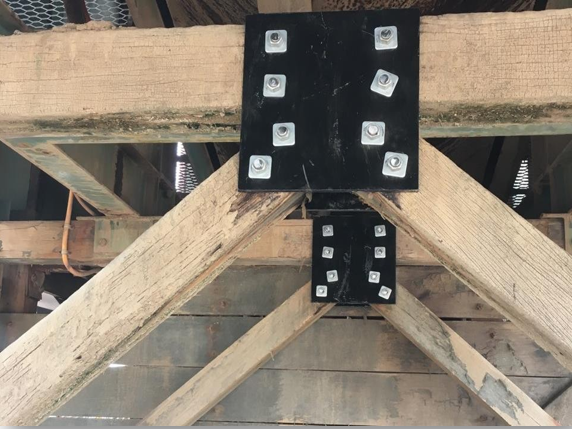
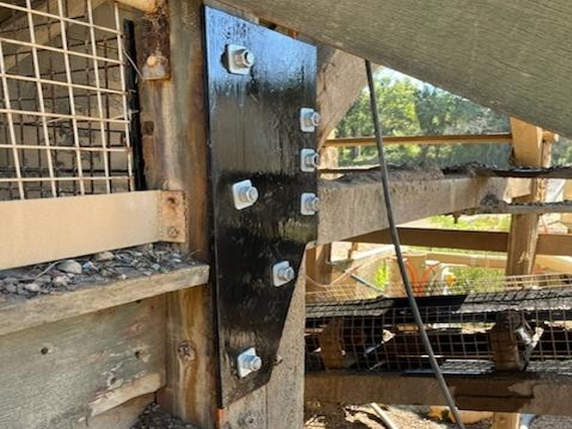
We were approached by one company after discovering that the galvanized steel plates used to join the timber frames had corroded and virtually disappeared in less than 6 years.
When replacing the steel plates, the customer wanted to be sure that the new plates would last him more than 6 years. As a result, ungalvanised steel plates were blast-blasted and Polekote coated by Byrne Bros to 0.5mm with a much faster turnaround (and better long-term prospects) compared to traditional systems.
POLYUREA COATING OF TANKS
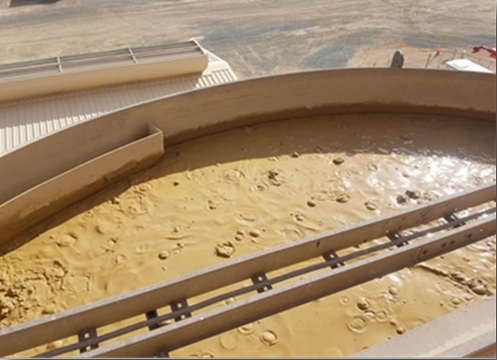
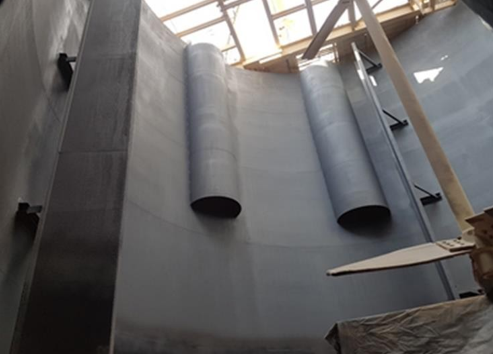
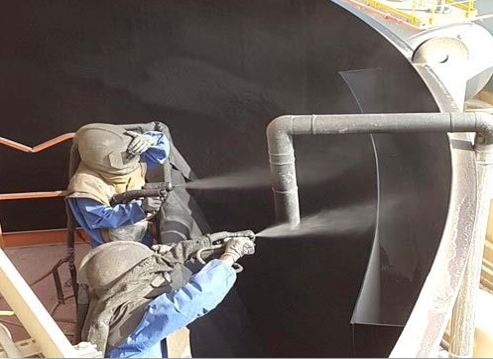
Less than 2 years after commencing operation, the CIL tanks at the gold mine were inspected and found to have suffered severe erosion in addition to significant pitting corrosion. To stop the corrosion and erosion, Tomingley decided to coat the tanks with ShieldPoly F-15.
Polyureas and coatings are ideal for protecting these objects, because they are extremely resistant to abrasion, have high chemical and corrosion resistance, and also work perfectly when constantly immersed in water. The best thing about polyurea is that it works equally well with large walls and intricate details around bulkheads, and is extremely abrasion resistant.
The coating was applied to the tanks one at a time, while 5/6 tanks were in operation at the same time. Taking into account the cleaning, it took about 7 days to return each tank to operation.
Not all polyurethanes are the same, Shield Crete formulas are the latest, based on more than 30 years of experience of our chemists and applicators.
In this case, an etch primer was used due to the stage requirements and open time needed. It is this flexibility in our systems that means we get the best result for the specific constraints of the project.
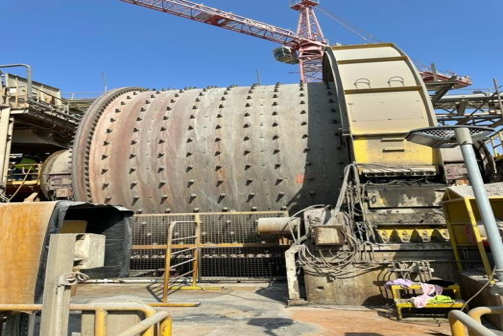
POLYUREA LINING OF THE MILL
The operators of a gold mine wanted to find a way to protect their assets from the high levels of corrosion that can be found at the site. This project profile discusses the relining of the Sag Mill.
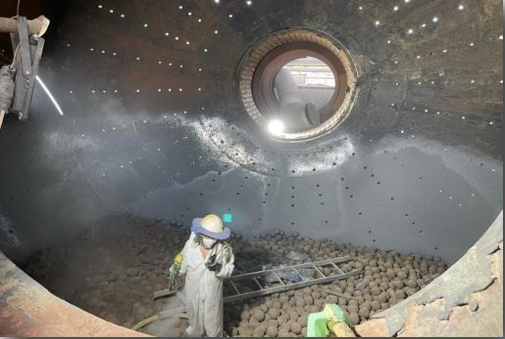
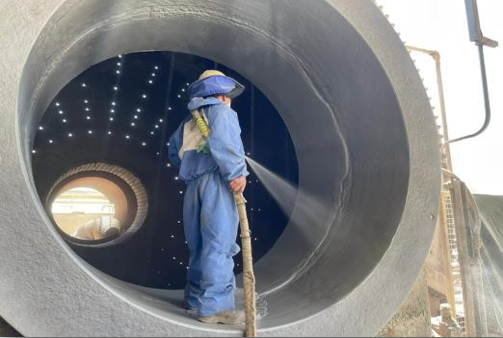
ShieldPoly F-15 was chosen for its excellent physical properties, technical support and proven performance. In this case, ShieldCrete International managed the project together with our subcontractors. ShieldPoly was applied under 6mm thick wear plates on the internal walls of the mills to prevent the corrosion problem that commonly occurs when using alternative rubber linings, especially at the rubber joints.
The fast curing properties of ShieldPoly F-15 meant that the facility shutdown time was kept to a minimum and we even met the deadline.
An Inspection and Test Plan (ITP) was maintained throughout the project, and the customer and manager inspected and signed off on the project at the end before the wear plates were installed.
In agreement with the client, the coating was applied to a depth of 6 mm. The coating thickness of 6 mm provides sufficient protection against abrasion and corrosion with minimal changes in the mill dimensions. This application provides a seamless lining that will last longer than the rubber it replaced. ShieldPoly has an excellent combination of high tensile strength, high elongation and high hardness (although hardness is less important for the abrasion resistance of polyurea).
The customer was very satisfied with the results and the applicators moved on to applying a general coating on the steel.
PERMANENT PROTECTION OF CONCRETE
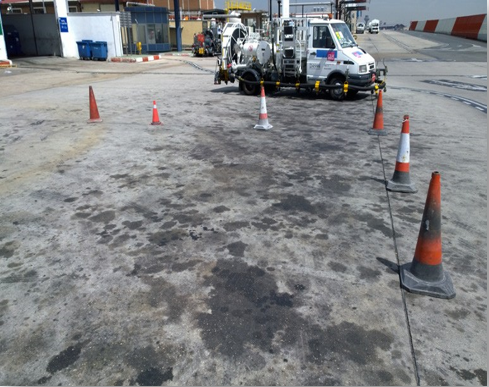
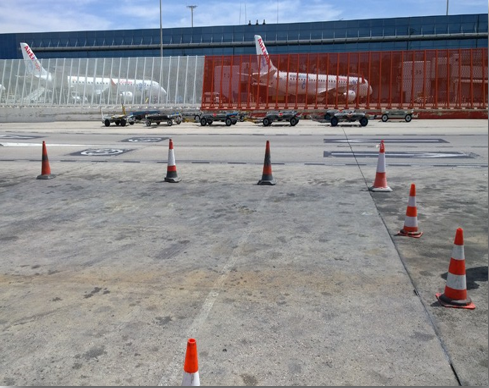
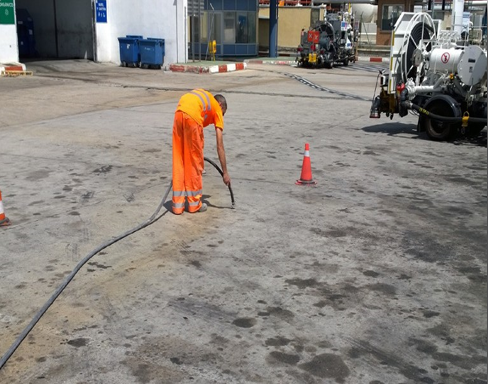
The main international airport, until now, has used conventional chemicals that treated only the surface and left all the contaminants embedded in the concrete capillaries, and over time they reappeared.
Spray-Lock SCP 743 was used over three consecutive applications to remove the vast majority of this stubborn contamination through the reaction of calcium silicate hydrate (C-S-H) into the concrete and during application into the concrete capillaries.
SCP blows and then blocks the concrete by filling capillaries (rather than just blocking them), stopping further penetration of contaminants. This makes it easy to remove contaminants from the concrete surface and maintain the appearance of a clean concrete site.
By strengthening and sealing concrete, ShieldCrete® SCP-743 also provides superior and rapid concrete curing, eliminating the problems of surface cracking and slab twisting.
POLYUREA PROTECTION OF STRUCTURAL STEEL
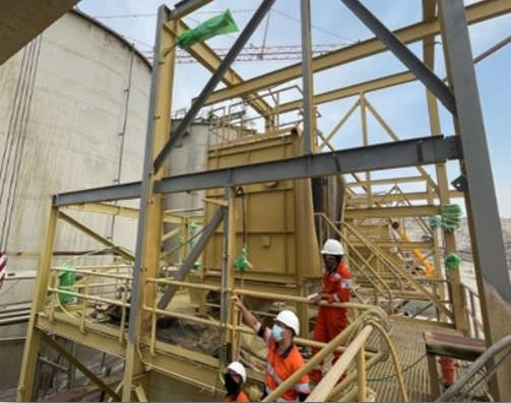
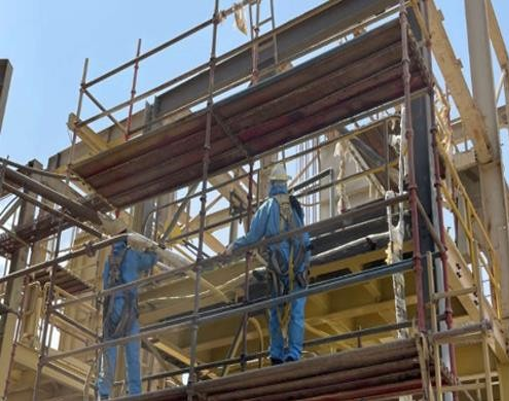
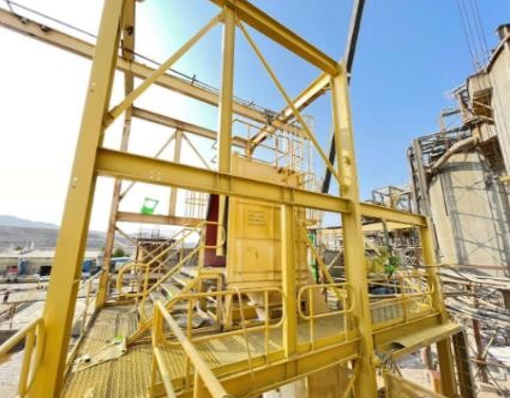
After we coated the mill, the gold mine owner contracted to coat the structural steel of his facilities on the mine site. The coating was requested to protect objects from corrosion and mechanical damage during daily operation of the object.
We were selected for this project due to our proven knowledge and experience in the field of asset protection and specialization in the use of polyurea materials. Our previous Sag Mill coating work proved to the mine owners that we were the right team for the job.
Shield Poly F-15 was selected for this project due to its unique ability to provide higher than expected durability and performance with minimal downtime. The work was challenging in nature as the mine contained several structural steel members that were difficult to cover due to geometry, structural complexity and hard to reach locations.
However, the rapid curing nature of ShieldPoly F-15, combined with our efficient team, has kept equipment and site downtime to a minimum.
ShieldPoly provides a durable coating that protects steel structures with an estimated service life of >25 years in these harsh environments. This provides peace of mind and lower asset maintenance costs. While working on the site, our company provided additional training in material handling, equipment maintenance and troubleshooting to increase the potential life of the assets.
And again, the client was very satisfied with the results and the speed with which the application was performed.
PREVENTING WATER FROM THE RIVER FROM ENTERING THE POWER PLANT OF THE DAM
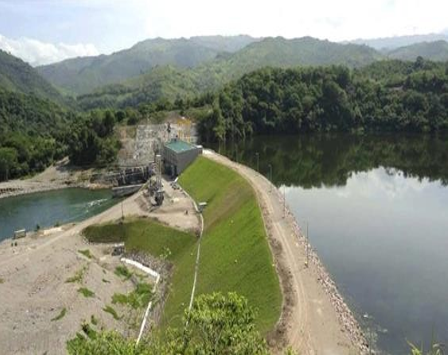
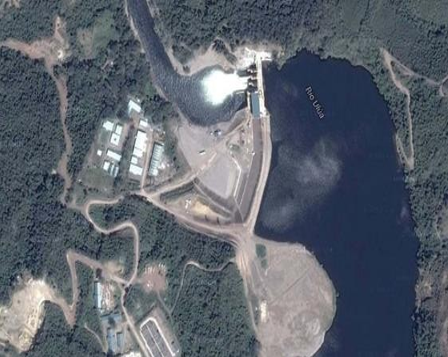
The dam was built in 2012-2013 as a hydroelectric dam to provide 38 megawatts of electricity. Before the main wall was completed and filled in, an underground plant room was built in the bedrock next to the river. It was built below ground level with walls two meters thick in early 2013. This room will eventually be under a 22-meter spillway that will fill the dam in early 2014. After the construction was completed, it was discovered that water was seeping from the river into the plant room. This caused serious concern as 22 meters of water was to be filled above the room.
The increased hydrostatic pressure would turn the seepage into a flood and the plant room into a reservoir! It was asked for a solution, and it was pointed out that it was impossible to treat the the positive side of the wall as it is adjacent to river bedrock. February 15, 2013 at 14.30 - SCP 743 was applied to the leaking wall. At 9.30 am on 18 February 201 3 the wall was completely dry, allowing the installation of the of the equipment. Despite 22 meters of water above the plant, there is no water intrusion in the plant room today. SCP 743, applied on the negative side, can withstand such high levels (and more) of hydrostatic pressure.